
Welcome to Historia’s most popular regular feature, our round-up of books published by members of the Historical Writers’ Association (HWA) to look out for during the coming year.
For 2024, there are more than 200 books covering history, biography, and historical fiction and spanning eras from Ancient Greece and Egypt to the 1980s. They sweep around the world from St Petersburg to Mumbai, Florence to Japan, Warsaw to the Wild West, and Constantinople to the Carpathian Mountains.
We’ll be updating this list when information about new books comes in, so do come back and see what’s been added.
January

The year begins with three books by HWA authors on 4 January. In The Fever Box by LP Fergusson, Clara Cooper’s abusive husband is lost in action and she returns to nursing, in a military hospital. Who is the mysterious girl in the ‘fever box’? And who is haunting the opium dreams of pilot Dougie Douglas? Frightening events convince Clara that her husband has returned, and she faces a greater danger than bombs. Read our feature about the wounded men this story draws on.
In Liz Hyder‘s The Illusions, out in paperback, Cecily Marsden thinks she may have unknown powers. Eadie Carleton struggles for recognition as a film-maker. Magician George Ferris wants to harness the power of moving pictures. Their worlds combine for a spectacular performance — but Cec must fight to save it from sabotage and harness the magic within her. Liz writes about the magic-makers who inspired her book.
Also in paperback on the 4th, Para Bellum by Simon Turney is set in the year 381. Kitigern, king of a powerful Gothic tribe, has sworn revenge on the legionaries who killed his brother. One of them, Flavius Focalis, seeks to warn his former comrades. By land and sea, across the Empire, the former soldiers face their enemy’s wrath. For war is coming again — and the only question is, do they die now, or later?
Griff Hosker‘s Conquest, the second in the series with the same name, is anticipated for paperback release on 7 January. See 12 January.

Linda Stratmann returns on 12 January with Sherlock Holmes and the Duelling Dukes, book six in the Early Casebook of Sherlock Holmes. In 1877 Holmes and his friend Stamford spend sporting week at a large country manor. But the guests are riven by hatreds and sinister plots — then one is discovered dead. Can Holmes and Stamford find the murderer? Will he strike again?
On same day, Griff Hosker‘s Conquest is out as an ebook. William the Conqueror has the crown… and many enemies at home and abroad. He must subdue a land that hates the Norman yoke. The north rises against William’s rule, and Richard fitz Malet, in his manor near York, finds himself alone and isolated. He must form his people into a fighting force — or face death.
Clash of Kings is the latest in MJ Porter‘s Brunanburh Series, published on 13 January. After the slaughter at Brunanburh in 937, Olaf Gothfrithson of the Dublin Norse and Constantin of the Scots plot revenge on Athelstan. But the English king dies and his successor, Edmund, faces the might of the Norse, Welsh and Scots. Can he banish England’s enemies once and for all, or will it, and its king, lose all that’s been gained?

Women of the Anarchy by Sharon Bennett Connolly is out on 15 January. In 1135, Stephen of Blois usurped the throne from his cousin, the Empress Matilda, sparking a 19-year civil war: the Anarchy. This is the story of two Matildas: the Empress, fighting for her birthright and her children’s, and Stephen’s wife, determined to see her own son inherit. Their strengths, weaknesses and ambitions swung the fortunes of war. Sharon has written a feature about how, and why, the conflict began.
The same day sees The Austrian Bride by Helen Parusel published. Austria in 1938, and Ella enrolls in a Reich Bride School to learn secrets she can use against the Fascist regime. A desperate race begins to save the people she loves as Europe stands on the brink of war. But if she is caught betraying the Nazis it could be her death sentence…
On 16 January Louise Fein‘s The London Bookshop Affair is out as an ebook. In 1962 Celia Duchesne, working at a London bookshop, learns of an undercover agent connected to her whose betrayal in France in 1942 was hushed up. As she learns more she becomes increasingly aware of efforts, both past and present, to protect state secrets. Celia must risk everything she holds dear, in the name of justice.
American Wings by Elizabeth Wein and Sherri L Smith, published on the same day, follows a group of determined Black Americans who created a flying club and built their own airfield on Chicago’s South Side. As the US approached World War II they set up a school to train new pilots, teaching both Black and white students together and proving that successful integration was possible.

JC Briggs goes Gothic on 19 January with The Legacy of Foulstone Manor. Joan Goss inherits Foulstone but, haunted by her fragmented memories of her childhood there, avoids the old house. When her niece Amanda comes to stay with her, Joan is forced to confront the secrets of her past. How did her parents die, and why was she never told the truth? Can she come to accept the inheritance she’s rejected?
Two books are out on 24 January. In The German Child by Catherine Hokin, Annaliese vows she will find the child taken from her by Nazis in 1944. In 1979, Evie investigates the stories of stolen children, including Sebastian, who she feels drawn to. But an old photo shows her that her whole life has been a devastating lie – and that her and Sebastian’s pasts are shockingly connected. Read Catherine’s feature about the terrible truth behind her story.
And The Secrets of Crestwell Hall by Alexandra Walsh slips between 1605, when Bess Throckmorton tries to stop a plot to kill the King, and the present, when Isabella Lacey finds Bess’s diary, telling a new version of the Gunpowder Plot. But when her daughter Emily’s life is suddenly in terrible danger, Isabella understands the relentless fear Bess and her friends felt. Alexandra’s feature for Historia looks more closely at Bess and the plotters’ wives.
Miss Austen Investigates by Jessica Bull is published on 25 January. It’s Hampshire in 1795, and young Jane Austen is caught up in a murder mystery when a milliner’s body is found tucked away in a linen closet and her brother Georgy is suspected. Jane must use her sharp wits to unmask the murderer if she’s to save her beloved brother from the gallows. There’ll be a Historia feature from Jessica connected to her book.

In The Baker’s Secret by Lelita Baldock, out the same day, two sisters are forced to make an impossible choice in Nazi-occupied Latvia. To save a child, one sister must flee, while the other must stay behind. The secret of what happens stays hidden until Zenta, now a grandmother, is finally ready to set the truth free.
Æthelflæd, King Alfred’s daughter, is the best-known of the royal women of the house of Wessex. Yet many more, rich and powerful in their own right, shaped the century when England ceased to be a number of small kingdoms and became one realm. MJ Porter tells their story in The Royal Women Who Made England: The Tenth Century in Saxon England, out on 30 January. MJ looks at some of them in a Historia feature.
A Shaft of Light by WJ Small is out on 31 January. In the third of the Will Patten Thrillers, Will and his partner Clemence take refuge from Thomas Cromwell and Richard Rich in Jervaulx Abbey, where he gets involved in the Pilgrimage of Grace. But, returning to London, he’s imprisoned for his actions and faces an impossible choice: betray the leaders of the Pilgrimage to his enemies, or lose his life.
February
Five books are published on 1 February. To Kill a King is the eighth book in David Gilman‘s Master of War series. In 1367 Sir Thomas Blackstone, Edward III’s Master of War, must stem the tide of support for the King of France. But the French are on the trail of Blackstone’s son Henry, riding incognito across France — and will target him to use against his father.

In Queen of Diamonds by Beezy Marsh, the third in her Queen series, it’s 1922 and Alice Diamond forms a criminal gang, the Forty Thieves, which is soon in conflict with the gang led by Kate Felix. But Alice, known as the Bob-Haired Bandit, and Kate make some powerful enemies, and Alice must sacrifice more than she ever imagined if she is to become the gangland queen.
Still on 1 February, The Low Road by Katharine Quarmby is released in audio format. Orphan Hannah Tyrell is sent to London to be trained for domestic service. There she meets Annie Simpkins, and their friendship deepens into passionate love. But when the girls are transported to Botany Bay for theft, the strength of their bond is tested. Will they ever meet again? Katharine is writing us a feature about the shocking history that inspired her book.
When Maude Horton’s sister disappears, she sets out to find answers – and get justice for her sister — in Maude Horton’s Glorious Revenge by Lizzie Pook. Her journey takes her to the dark side of London, and into the path of dangerous, powerful men, who profit from the city’s horrors. But they’re not the only ones who are dangerous. Maude has skills of her own…
On the same day Fyneshade by Kate Griffin is out in paperback. Marta, the new governess at Fyneshade, is drawn to Vaughan, the dangerous son of the owner, banished by his absent father. But, guided by the dark gift taught to her by her grandmother, Marta has her own plans. It will take more than a family riven by murderous secrets to stop her carrying them out… Read Kate’s selection of the top six adaptations of The Turn of the Screw, an inspiration for her bestselling novel.

It’s 1824 in Joanne Burn‘s The Bone Hunters, published on 8 February. In Lyme Regis, Ada Winters uncovers a set of unusual fossils on the cliffs. Edwin Moyle is looking for a discovery that will place him amongst the greatest geologists of the age. And Ada seems to hold the key. But what is the creature that Ada and Edwin seek to unearth? And will it lead them to greatness, or destruction?
In The Secrets of Blythswood Square by Sara Sheridan, also on 8 February, it’s 1846 and Charlotte Nicholl discovers that her inheritance is linked to a secret collection of erotic art. She must sell it and risk shaming her family — or lose her home in a respectable Glasgow square. Her new friend, Ellory McHale, has her own secrets, and as the truth catches up with both women it may destroy them… or set them free.
Douglas Skelton‘s Company of Rogues series returns on the same day with A Grave for a Thief. In 1716, Jonas Flynt – thief, gambler, killer – is tasked with finding Christopher Templeton, a lawyer with secrets to share with the Company. But while Flynt hunts for the missing man, someone else may be stalking him… with murder in mind.
Lilli Bergen works for the Political Warfare Executive, broadcasting British propaganda to Nazi Germany, in The Shadow Network by Deborah Swift, out in ebook format on 13 February. But when her ex-boyfriend, Bren Murphy, appears at her workplace, Lilli, who suspects he’s a Nazi sympathiser, must find out the truth in order to expose him.

The same day sees two books by Clare Flynn. In The Artist’s Apprentice it’s England in 1908. When Alice Dalton’s father tries to arrange her marriage to Edmund Cutler she runs away, determined to lead an independent life. She’s apprenticed a stained-glass artist — but is stunned to discover she’ll be working for Edmund. He, too, has turned his back on his family and followed his passion for art — at a terrible cost.
It’s July, 1914, in The Artist’s Wife. Looming war threatens Alice and Edmund’s hard-won happiness. Her shaky reconciliation with her brother Victor ends when he enlists. Meanwhile Edmund is torn between duty to his country, his moral compass, and protecting Alice from his powerful father, who could destroy their lives. Alice must fight to hold on to everything she holds dear.
Six books are published on 15 February, including The Wartime Book Club by Kate Thompson. In Jersey in 1943, Nazi occupiers order Grace La Mottée, the island’s librarian, to destroy forbidden books. But she hides them and, with postwoman Bea Rose, forms a wartime book club, offering islanders the escapism of reading. Then, as tensions turn to violence, the women face the true, terrible cost of resistance. Kate has written us a feature about the bravery of people during the occupation of Jersey.

The other five are paperback editions of published books. A Time to Live by Vanessa de Haan sweeps from the smoking battlefields of France to the rich estates of Devon, from workers’ unrest to financial crashes, from suffragettes to political extremists. This is a story of legacy and scars, of the price of change, the price of family. Vanessa writes about how her boots-on-the-ground research succeeded when archives let her down.
In The Hidden Years by Rachel Hore it’s 1939 and Imogen Lockhart finds being school matron at Penmartin House is complicated. In 1966, Belle Patterson moves to the commune at Penmartin to follow her love — and because of a photo of herself as a baby. As conflicts arise at the commune, Belle has to face difficult truths — and learns how her life and Imogen’s are linked.
Cesare Aldo returns in DV Bishop‘s Ritual of Fire in paperback on the same day. In 1538, when a wealthy merchant is found hanged and set on fire, Florence is shaken by memories of Savonarola 40 years before. With Aldo hunting thieves in the Tuscan hills, Constable Strocchi is left to investigate this and other ritual killings. The rich flee to the countryside — but the hills can also hide murderers. Read the first chapter of this historical thriller in Historia.
In Andrew Taylor‘s The Shadows of London, also out in paperback, the Great Fire still overshadows the capital. A body is discovered in the ruins, and architect Cat Hakesby must stop her restoration work. When Lord Arlington and the Duke of Buckingham take an interest in James Marwood’s murder investigation, he suspects the trail may lead to the heart of government. Read Andrew’s portrait of Louise de Keroualle, Charles II’s mistress and a character in his book.
Finally on 15 February, The Shadow Network by Deborah Swift is released as a paperback; see 13 February for details.

The Golden Hour by Jacquie Bloese is out on 22 February. In late-Victorian Brighton, twins Ellen and Reynold Harper are portrait photographers by day, but at the golden hour they switch to erotic tableaux. Ellen is torn between loyalty to Reynold, her attraction to new model Lily, and her friend, unhappy wife Clem. The three women learn that the line between the promise of freedom and the threat of ruin is all too thin…
Also on the 22nd, Sharp Scratch by Martine Bailey is set in Salford in 1983. Lorraine Quick is a single mum, a member of a failing band, and personnel officer at the Memorial Hospital. Thanks to her training in psychometric testing, Lorraine will be pivotal in selecting a new general manager; but when a killer strikes at the hospital, she must use her skills to find the murderer among the job’s candidates.
Griff Hosker‘s Horse and Pistol, on the same day, is the first in his English Mercenary series. Newly orphaned, James Bretherton falls in with two English mercenaries and begins a new life as a soldier. But this is no local spat; it’s a religious war between Catholics and Protestants and it engulfs much of 17th-century Europe. We know it as The Thirty Years’ War.
On 28 February Jill Culiner‘s Those Absent on the Great Hungarian Plain examines how all that was familiar in Hungary’s Great Plain – traditional music, centuries-old customs and local architecture – was disappearing, while reassurance came in the political promises of an authoritarian populist leader and a violent hatred of those eternal scapegoats: the Roma, and the (largely vanished) rural Jewish community.
Four books are published on 29 February. A Court of Betrayal by Anne O’Brien is the story of the heiress Johane de Geneville, married to Roger Mortimer, Earl of March, in 1301. Her husband deposes Edward II and rules England alongside Queen Isabella. When Roger is accused of treason, she is robbed of her freedom and must fight for justice — with her life, and her children’s, hanging in the balance.

Next is Secrets of Malta by Cecily Blench. In Malta in 1943 Margarita, a singer, has broken off her affair with Henry Dunn. His wife, Vera, informs her that Henry has disappeared, presumed dead, and Margarita tries to find out more. Is the notorious spy Nero involved? An unlikely bond develops between the two women as they seek to unmask Nero before his deadly plan threatens the course of the war.
Katie Lumsden‘s The Secrets of Hartwood Hall, shortlisted for the 2023 Debut Crown Award, gets its paperback release on the same day. In 1852 Margaret Lennox takes a job as governess at Hartwood Hall, hoping to escape her past. She likes her pupil, Louis, but there’s something odd about the house — and about Louis’s mother. Has everyone got something to hide? As her own secret pursues her, she must trust her instincts to survive. Katie’s written about her love of, and inspiration by, Victorian literature.
And finally, Louise Fein‘s The London Bookshop Affair is out in paperback; see 16 January for details.
March
Donovan Cook‘s Charlemagne’s Cross series returns on 1 March with Thor’s Revenge. As chaos reigns in a kingless Denmark, Sven goes home to find Ribe sacked and his grandson, Charles, kidnapped. Others want revenge for the chaos Sven has caused and he must stand in the shield wall once more if he is to survive and rescue his grandson. It seems only the gods can help Sven and Charles…

Requiem of Revenge by Richard Kurti is out as an ebook on the same day. After the Chevalier John Taylor, an esteemed surgeon, is blinded and left for dead, Doctor Erasmus Harvey examines his wife, Lady Arabella, who shows no remorse. Is she insane? But her testimony reveals the truth not only behind the crimes inflicted on the chevalier, but also the death of the celebrated composer JS Bach.
A new Nicola Cornick book, The Other Gwyn Girl, is published on 7 March. It’s 1671, and Nell Gwyn is Charles II’s favourite mistress. But her sister, Rose, married to a highwayman, is in prison and needs Nell’s help to get out. Nell needs Rose’s help, too, after a plot to steal the Crown Jewels goes wrong. Nell’s position is at risk, and if Rose can’t solve the riddle of the jewels they will both end up in the Tower.
Blood Roses, the first in Douglas Jackson‘s Warsaw Quartet, hits the shelves the same day. In Warsaw in 1939 former chief investigator Jan Kalisz is forced to work with the occupiers even as he gathers information for the resistance. When the niece of a Wehrmacht general is killed, Jan links the murder to other killings. But, shunned as a Nazi collaborator, can he solve the case before another girl is taken?
The ebook of The Romanov Brides by Clare McHugh is out on 12 March. When Ella of Hesse marries the Tsar’s brother, Grand Duke Serge, her sister Alix falls for the Russian heir, Nicholas. Their decisions to marry into the Romanov family will lead to tragic consequences, not only for themselves and their families but for millions in Russia — and around the world.
Also on 12 March, The Last Viking brings MJ Porter‘s England: The First Viking Age series to a close. King Coelwulf has captured Jarl Guthrum. But Guthrum is not the only Viking raider who wishes to subdue Mercia. Coelwulf and his allies, grief-stricken after the terrible events in Grantabridge, must still fight for her survival.

14 March sees the publication of No Life for a Lady by Hannah Dolby. Violet Hamilton doesn’t want to marry. She wants to work and make her own way in the world — but more than anything she wants to find her missing mother. It’s no job for a lady. But when Violet hires a seaside detective to help, she sets off a chain of events that will put more than just her reputation at risk.
The paperback edition of Vaseem Khan‘s Death of a Lesser God, the fourth in his Malabar House series, is out on the same day. Inspector Persis Wadia of the Bombay Police and Archie Blackfinch investigate the murder of the activist Farid Mazumdar. She uncovers a possible link to the murder of an African-American GI in 1946. But if the man sentenced to death for Mazumdar’s murder didn’t kill him, who did? Read Vaseem’s related feature on why Kipling despised Bombay.
The Book of Secrets by Anna Mazzola is out on 21 March. Rome in 1659, and prosecutor Stefano Bracchi investigates a suspicious number of deaths. Girolama and her friends are midwives and fortune-tellers. And a young wife, Anna, hopes to escape her abusive husband. Stefano’s investigation introduces him to horror, magic and unusual characters and he wonders if certain deeds should remain forever unpunished.
On the same day, the paperback of The Barbarian by Douglas Jackson hits the shelves. It’s 406AD and Marcus Flavius Victor must leave Britannia and seek safety with an old friend — only to be caught up in an Ostrogoth uprising. Fighting their way through the dark heart of barbarism, and dogged by Marcus’s vengeful son, they stumble on a secret that could save Rome.
Five books come out on 28 March. In Mrs Hart’s Marriage Bureau by Sheena Wilkinson matchmaker Martha hopes unromantic April McVey will breathe fresh air into her struggling 1930s business. When lonely widower Fabian arrives at the bureau, the pair’s matchmaking skills – and professionalism – meet their first true test.
The Red Hollow is Natalie Marlow‘s second William Garrett novel. When William Garrett and Phyll Hall are called in to uncover the identity of the intruder ‘mermaid’ at Red Hollow sanatorium they become trapped in a world of madness, the occult, and grisly murder. William must use all his strength to differentiate between the real-life monster at Red Hollow Hall and the monsters of the mind.

Three more are paperbacks. In Disobedient by Elizabeth Fremantle Artemisia Gentileschi works hard to become a great artist. Her new tutor, Tassi, represents everything that a life of freedom might give — until the violent act that threatens Artemisia’s honour. In the eyes of her family, she should accept her fate. In the eyes of the law, she is the villain. But Artemisia is a survivor. And this is her story to tell.
Red’s fortune telling, using the Square of Sevens method, delights Georgian Bath in The Square of Sevens by Laura Shepherd-Robinson. But she is tormented by questions: who was her mother? How did she die? And who were her father’s mysterious enemies? Her search for answers takes her around England, mingling in high and low society — and puts her in grave danger.
Finally on 28 March there’s The Romanov Brides by Clare McHugh; see 12 March for details.
The Sword of Cnut by Griff Hosker comes to ebook readers on 29 March. Sven Saxon Sword is now a lord, and thinks his service to King Cnut — now he’s helped him gain the crown — is over. He’s wrong. Now he has to deal with Norse raiders and to serve in a war against the Swedes. The Oathsword is called upon again to save not only King Cnut and his ambitions, but also his home. Griff’s written us a feature about his impressive career as a writer of historical fiction.
Over two evenings in March 1912, more than 250 women, aged 19 to 79, were arrested and charged with smashing shop and office windows across London. Secret Missions of the Suffragettes by Jennifer Godfrey, out on 30 March, examines these evenings and explores the secrets of the WSPU women’s movement — safe houses, self-defence training, disguises — and the stories of the women themselves.
April
The month begins with Strike Up the Band: New York City in the Roaring Twenties by Jules Stewart and Helen Crisp on 1 April. The 1920s saw almost unprecedented prosperity and economic expansion that made New York the powerhouse of America. This book looks at the city’s outstanding personalities, from literary figures to sports stars, musicians, composers and journalists, and visits the places they frequented.

On 4 April there are four books by HWA authors. It’s 1959 and time for 18-year-old Sophie’s life to start in Bonjour, Sophie by Elizabeth Buchan. She dreams of escape to Paris, the wartime home her mother fled before her birth, hoping to discover more about her family and, perhaps, to find a place where she can finally belong. But the real Paris is both everything she imagined, and not at all what she expected…
The Skeleton Army is the second in Alis Hawkins‘s Oxford Mysteries. When a Salvation Army soldier is killed, their shadowy enemy, the Skeleton Army, claims responsibility. Non Vaughan, aspiring journalist, and Basil Rice, Jesus College fellow, are compelled to investigate. But as threats and violence escalate, Non and Basil must stop the fighting before the city is engulfed in fire and blood.
The sixth of MJ Porter‘s Eagle of Mercia Chronicles, Enemies of Mercia, sees Wiglaf of Mercia send Icel into the heartland of enemy-held Wessex to discover who is conspiring against his throne. Surrounded by deceit and lies, Icel must fight to discover the truth whilst keeping himself and his allies safe from Mercia’s — and their — enemies.
And in The Devil to Pay by Katie Daysh, it’s 1802 and Arthur Courtney hopes to spend a blissful summer with Hiram Nightingale. But when a ship carrying diplomats disappears, the pair join the search and, as their mission grows more dangerous, the truth of Courtney and Nightingale’s powerful bond could be the spark that sets everything ablaze on board.

Three books are published on 11 April. Tim Hodkinson‘s Sword of the War God is set in the 5th century. The Huns, led by Attila, are Rome’s deadliest enemies, undefeated in conventional warfare. Attila seeks the Burgundars’ lost treasure, the War God’s sword, said to make the bearer unbeatable. Can a one-eyed old warlord from distant lands and his strange band of warriors save Rome? One thing is sure: blood will flow… Tim’s written about the legendary stories from that era which still resonate today.
The Household is Stacey Halls‘s new novel. In 1847 Urania Cottage offers refuge for prostitutes, petty thieves and destitute women. But do they want it? In Piccadilly, millionairess Angela Burdett-Coutts, a benefactor of Urania Cottage, discovers that her stalker has been released from prison. As the women’s worlds collide, they discover that freedom always comes at a price.
Still on 11 April, Julie Owen Moylan‘s 73 Dove Street is out in paperback. When Edie Budd arrives at a shabby boarding house in 1958, it’s clear she’s hiding a terrible secret. Tommie has an addiction to seedy Soho nightlife — and a man she can’t quit. Landlady Phyllis also keeps quiet about her past. But when Edie’s past catches up with her the women’s lives change forever.

The Rooster: Discovering My Father’s Memories from the Jasenovac Concentration Camp by Sibel Roller is the story of a father seen through his daughter’s memories of him. It contains the manuscript left by her father, Dragan; a personal learning experience about a part of her father that she never knew, and a tale of survival, resilience and humanity. It comes out on 16 April.
There are five books published on 18 April. In Katherine Mezzacappa‘s The Maiden of Florence Giulia is chosen to end rumours of a prince’s virility in 1584 — in return for her life and a dowry. Years later, with her own family, she hopes she has escaped her past. But when a sinister figure from her youth reappears, she must finally take control of events and shape her own future.
The Paris Peacemakers by Flora Johnston is set in Paris 1919. Three Scots try to pick up the pieces of their lives while the fabric of Europe is stitched together at Versailles. Stella Rutherford throws herself into her job to escape her grief for her lost brother. Her sister Corran is to work among the troops in France. Surgeon Rob Campbell is also trying to escape the ghosts of his past.
Sophia Holloway‘s To Catch a Husband also comes out on 18 April. Mary Lound and her mother have lost the family estate, Tapley End. When the new owner, Sir Rowland Kempsey, takes up residence, Mary decides to recover her beloved home by catching a husband. But though she’s good at fishing (and less good at flirting), landing a man is more difficult than she’d anticipated.

And in The Shadow Key by Susan Stokes-Chapman, physician Henry Talbot is out of place in Meirionydd in 1783; he can’t speak Welsh and the superstitious locals distrust him. Linette Tresilian of Plas Helyg feels something is not right in the village. When Henry investigates his predecessor’s disappearance, the truth about her family is revealed, binding her and Henry’s destinies together.
The King’s Jewel by Elizabeth Chadwick is out in paperback on the same day. Nesta, a captive Welsh princess, is married to the Norman Gerald FitzWalter and returns to her beloved country. There she meets Owain, son of the Welsh prince. When he offers her the chance to join him in his plan to overthrow Norman rule she must choose between duty and desire.
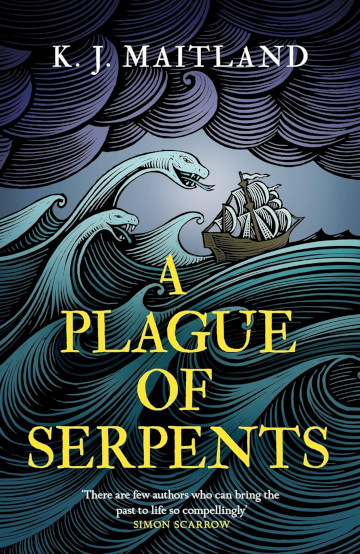
One of six books published on 25 April, Daniel Pursglove is back in A Plague of Serpents by KJ Maitland. Three years after the Gunpowder Treason, the King’s enemies prepare to strike again and Daniel must infiltrate the Serpents — a secret group of Catholics — or risk his own execution. Then Daniel spots a familiar face among their number. Can he escape the web of treason he is ensnared in? Or has his luck finally run out?
Also on the 25th, The Sugar Girls of Love Lane by Duncan Barrett and Nuala Calvi tells the remarkable stories of the women who worked at the famous Tate & Lyle factory in Liverpool for over a century. The work was tough, but they found their own ways of having fun, and the friendships they formed would last a lifetime. Many met their husbands there, and expected their own children to follow in their footsteps.
The Emperor’s Sword is the sixth in Christian Cameron‘s Chivalry series, which follows William Gold from the killing fields of France, through life as a routier and criminal, to redemption with the Knights of Saint John, further disillusion and an eventual career as a professional soldier and knight.
On the same day, in Ellee Seymour‘s The Royal Station Master’s Daughters in Love, it’s 1919 and the Saward girls feel the aftershocks of the First World War. As do the villagers: when Kitty Willow and her children lose their home on the royal estate, the Sawards rally to help, but the future looks grim. Then a benefactor takes a shine to Kitty. Could this be the new start in life she needs?
Hazel Gaynor‘s The Last Lifeboat is released in paperback. In the North Atlantic a lifeboat holds the survivors of a U-boat attack on an evacuee ship. Two very different women are aboard: Alice King, a teacher, and Lily Nicholls, a young widow. The dramatic events of that night and the eight days that follow bind the two women together in the most devastating way. Read Hazel’s feature about the true events that inspired her book in Sent away by sea: the forgotten history of WWII’s ‘seaevacuees’.
Finally on 25 April, The Walled Garden by Sarah Hardy is out in paperback. In 1946 everyone in the village of Oakbourne is scarred by their wartime experiences. Lonely and afraid of the man her husband has become, Alice Rayne tries to save her marriage — and Oakbourne Hall — from collapse. As she works on the walled garden she finds herself drawn into a new, forbidden love. Sarah’s novel was longlisted for the 2023 Gold Crown Award.

The Knight’s Tale by Griff Hosker is published on 26 April. It’s number 10 in his Struggle For a Crown series. King Henry and the Earl of Suffolk send Sir Michael of Weedon to France to recover a pyx. Before he can complete his task, he is conscripted back into the army and finds himself, once more, fighting alongside Sir John Talbot.
Rob McInroy‘s Moot is out on the same day. In July 1939, 3,500 young men from around the world arrive at Monzie Castle, outside Crieff, for the third International Rover Scout Moot. Bob Kelty finds the badly-burned body of a man in a tent outside the Moot campsite, but the authorities are strangely reluctant to investigate and it’s up to Rob to find the truth.
In Revenge of the Tyrants by LA Kristiansen, out on 29 April, it’s 1306 and, as the King of Scots wages a desperate, bloody war for Scotland’s independence, four Scottish knights journey to the heart of the conflict. Meanwhile, the Kings of England, France, and Norway plot to become the dominant force in Europe — and to thwart the Scots. The fight for the nation’s soul has begun.
The Queen’s Lender by Jean Findlay is published in paperback on 30 April. In 1603, George Heriot, jeweller to King James VI and I, moves with the Court from Edinburgh to London. George becomes wealthier than the king as he creates a fashion for hat jewels. However both king and courtier bow before the power invested in their wives. This book was longlisted for the 2022 HWA Debut Crown.
May

Sonia Velton returns to historical fiction with The Nightingale’s Castle on 2 May. Boróka is a servant at Cachtice Castle near the Carpathians. There are rumours that Countess Erzsébet Báthory murders young girls. Still, a tentative bond forms between the two women. But Erzsébet’s wealth poses a threat to the King. When a show trial begins against the infamous ‘Blood Countess’ where will Boróka’s loyalties lie? Sonia is writing about the real Countess Báthory for Historia.
On the same day A Nest of Vipers by Harini Nagendra sees amateur sleuth Kaveri Murthy investigating a crime when she and Ramu become tangled in a web of intrigue endangering the life of Edward, Prince of Wales, during his visit to Bangalore in 1921 amid the growing rumblings of Indian independence and the backdrop of female emancipation. Harini’s feature about the background to her latest Bangalore Detectives Club mystery explores the jadoogars, the street magicians of India, and their influence on Western magicians.
Still on 2 May comes Birds of Prey by Damion Hunter. In west Britannia, the powerful Silures plot rebellion against the diminished strength of the Romans. Centurion Faustus Valerianus, whose mother was a Silure, finds himself trapped between loyalty to the army and compassion for his people. With a great, final conflict ahead, he must confront the demons that haunt him and come to terms with his position.
Seven books by HWA authors are published on 9 May. 1217: The Battles That Saved England by Catherine Hanley charts the tumultuous events that strengthened England’s national identity. With the child Henry III now King under William Marshall’s regency and the French Prince Louis’s invasion losing support, the fortress of Dover was besieged, the city of Lincoln was attacked, and a great invasion force was stopped at sea. Read Catherine’s feature about chivalry in this turbulent era.

Daniel Smith‘s The Men Who Were Sherlock Holmes In 1893 a murder at the Ardlamont estate in Scotland triggered one of Victorian Britain’s most gripping court cases and brought together two pioneering forensic experts, Joseph Bell and Henry Littlejohn, the models for Conan Doyle’s Sherlock Holmes. The worlds of crime fiction and crime fact were about to collide… Dan is writing about this extraordinary incident for us.
In Courting the Sun by Peggy Joque Williams,16-year-old Sylvienne has newly arrived at Louis XIV’s splendid court at Versailles. But the naïve country girl soon finds herself ill-prepared for the world of intrigue, illicit affairs, and power-mongering she’s entered. And her mother has a secret she’s kept from both her daughter and the King; a secret that could upend Sylvienne’s life.
The other four books on 9 May are paperback releases of books already out in other formats. The Temple of Fortuna is the last in Elodie Harper‘s Wolf Den trilogy. In AD79, Amara, now a wealthy freedwoman in Rome, is caught up in the political scheming of the Imperial palace. Her daughter remains in Pompeii, raised by the only man Amara ever loved — and both are safest while she is far away. But, in the shadow of Vesuvius, how safe are they truly?
In A Day of Reckoning, the third in Matthew Harffy‘s A Time for Swords series, it’s 796 and Hunlaf and his comrades are searching for an object of great power in the Emirate of Al-Andalus. In the city of Qadis friends and enemies alike are not always what they seem — and a weapon there, deadlier than any ever known before, could change the future of all the kingdoms in Europe. Matthew’s written about Al-Andalus, Islamic Spain, for Historia, and his new feature, also linked to this book, is about Greek (also called Roman) Fire.

The Treason of Sparta by Christian Cameron is the seventh in his The Long War series. It’s 478BC. After defeating Persia in the Battle of Plataea, Athens and Sparta begin to bicker over dividing the spoils. Arimnestos, sailing past the Persian-held coasts, finds that the enemy is still not beaten… and that old alliances are now fraying. Who will save the cities of Ionia from the Great King’s wrath?
Our final book for 9 May is The Burnings by Naomi Kelsey. When the marriage of King James VI and Princess Anna of Denmark in 1589 brings Scottish housemaid Geillis and Danish courtier Margareta together, they ask — is black magic real? As the North Berwick witch trials mount into a frenzy of paranoia, can the women keep each other safe? And after the burnings are over, who will truly hold power? Read Naomi’s feature about a bizarre episode in the witch trials. Naomi won the 2021 HWA Dorothy Dunnett Short Story Competition.
On 13 May The Pyramid Murders by Fiona Veitch Smith, the latest in her Miss Clara Vale Mysteries, comes out as an ebook. An ancient Egyptian mummy donated to the Hancock Museum in Newcastle turns out to be a recent victim of murder. Clara goes to Cairo in February 1930 to solve the mystery. It’ll be in paperback, too, but there isn’t a link yet. Fiona is writing us a feature about using antique travel guides to research her book.
Clare Mulley‘s Agent Zo, out on 16 May, is the story of Elzbieta Zawacka, the WWII female resistance fighter called Agent Zo, the only woman to reach London from Warsaw as an emissary of the Polish Home Army command. In Britain she became the only woman to join the Polish elite Special Forces. In Nazi-occupied Poland, hunted by the Gestapo, she took a leading role in the Warsaw Uprising and the liberation of Poland. Clare will be talking about this remarkable woman to Carolyn Kirby for a Historia interview.

Return to Shiaba by Willie Orr, the second in his Leaving the Land series, is released on 21 May. Two crofters struggle to come to terms with the Highland clearances. While Catherine spreads her wings to find new talents for survival within herself, her husband, Callum, uses his stubborn loyalty to the land of his fathers to face down the increasing wrath of a political system weighted against them.
One of three books published on 23 May, Ben Kane‘s Stormcrow is the first of a new Viking series. Young Finn, called Stormcrow, raids the Irish coast in a Norse longship, seeking not just riches but vengeance for his murdered father. When he meets the new wife of Sigtrygg Silkbeard, King of Norse Dyflin, his life changes and he is once more in deadly danger.
In Litany of Lies, the latest Bradecote & Catchpoll mystery from Sarah Hawkswood, the abbot of Evesham Abbey reluctantly asks Undersheriff Hugh Bradecote, Serjeant Catchpoll and Underserjeant Walkelin for help solving a murder. But tensions are high between the abbey and the castle guard, and another killing will force the investigation down a dangerous path.
Out in paperback, Munich Wolf by Rory Clements sees Nazi power increasing in the Bavarian capital in 1935. When an English girl is murdered, Detective Sebastian Wolff is ordered to solve the crime. Followed by the secret police and threatened by his Hitler Youth son, Wolff suspects that the killer might be linked to Nazi leaders. His task may be impossible. And he might become the next victim… See our review of Rory’s book.

Sarah Siddons: the first celebrity actress by Jo Willett, out on 30 May, traces the extraordinary success of the 18th-century tragedienne. Poor, and with an unsuccessful stage debut, Sarah, married with children, fought her way to top billing, adored by theatre audiences, writers, artists and the royal family. She knew that image was everything. Her portraits she managed; her unhappy marriage was concealed. Jo is writing us a feature about Sarah’s remarkable life.
In The Vulcan and the Straits by Patrick Larsimont the invasion of Vichy North Africa begins and fighter pilot Jox McNabb steps up as Squadron Leader. But the campaign worsens and their Commanding Officer, Tony Bartley, is losing control. Is Jox up for the challenge of command? Can he lead his men to victory? Or are circumstances too stacked against him? It’s published on 31 May, as is…
The Stolen Daughter by Florence Olajide. It’s Western Africa in 1848 young Ṣìkẹ́mi’s Yorùbá village is raided and she’s sold to slave-trader Madam Tinúbú. Desperate to escape the brutality, she seizes the chance to save Madam’s life and is rewarded with training as part of Madam’s guard. But Ṣìkẹ́mi’s spirit will never be broken. Nothing will stop her from reuniting with her family. Not even Madam.
June
June opens with The Murderer Inside the Mirror, Sarah Rayne‘s second Theatre of Thieves mystery, on the 4th. London, 1908. The Fitzglens, theatre family and part-time thieves, search for their great-uncle’s infamous iron box. When Jack finds it and reads its contents, a play, he’s struck by a feeling of dread. And rightly, because the manuscript will take him on an adventure of revenge, madness, and murder.

Eight books hit the shelves on 6 June. In Arthur by Giles Kristian the Saxons are now lords of Britain. Old Beran, now a mercenary, is ordered to murder a boy, King Ambrosius’s grandson and Britain’s only hope — if he lives. Instead, Beran vows to deliver the boy to Camelot, which still holds out against the Saxons. He and his band face many enemies in their journey. But returning to Camelot means Beran must also face his own past. Read Giles’s feature on retelling the Arthurian legends.
The Burial Plot by Elizabeth Macneal sees trickster Bonnie framed for murder. Her partner, Crawford, gets her a job in a grand house. As Bonnie comes to understand the family – the eccentric Mr Moncrieff, drawing mausoleums for his dead wife, and their peculiar daughter Cissie, she wonders what secrets lie behind the house’s walls — and whether her own presence there was planned from the beginning…
In 1952 Sir Jack Drummond, his wife and their daughter were found murdered in France. The Drummond Affair: Murder and Mystery in Provence by Daniel Smith and Stephanie Matthews strips away prejudice and propaganda to reveal a grave miscarriage of justice. A light is shone on Drummond’s secret life, recasting one of the 20th century’s most notorious murders in a fascinating and important new light.
Still on 6 June, The Lost Queen by Sophie Shorland is a biography of Catherine of Braganza. Her reputation as Charles II’s boring, powerless wife, overshadowed by his mistresses, ignores her influence. Part of her dowry was Bombay, Britain’s first territory on the Indian subcontinent; she also popularised trousers for women, Baroque art and music, and — perhaps most permanently — tea drinking.

Every Spy A Traitor is the first in Alex Gerlis‘s new Double Agent series. In 1937, as Europe heads towards war, British spymasters know there is one Soviet agent in their ranks, codenamed Agent Archie. What they don’t know is that he is not the only traitor. And the life of Charles Cooper, a young British writer travelling Europe to research his novel, is about to change for ever. It’s out on 6 June.
Hannah Dolby‘s How to Solve Murders Like A Lady continues the adventures of Lady Detective Violet Hamilton. When the body of a local woman is found on the beach at Hastings and St Leonards, Violet’s efforts to investigate are blocked at every turn. Is that because, as a woman, she can’t possibly be allowed to think or act for herself? Or is it because someone sinister has Violet in their sights? It’s also out on 6 June.
The rest are paperback editions. In The Fascination by Essie Fox Twins Keziah and Tilly Lovell are identical, except Tilly hasn’t grown since she was five. Sold at 15, the girls are taken to London where Tilly becomes a pantomime star. Theo works at an anatomy museum filled with freaks. All three are caught in a web of obsession and deceit, endangering Tilly’s life and exposing them all to the horrors of their pasts. Essie’s written about the Victorian obsession with human anatomy that inspired her Gothic story.

Finally on 6 June, The Black Crescent by Jane Johnson is set in 1950s Morocco. Hamou Badi has a deep desire for order and justice; he trains as an officer of the law, working for the French in Casablanca. But the city is trapped in the turmoil of the nationalist uprising, and soon he will be forced to choose between all he knows — and all he loves.
In The Pyramid Murders by Fiona Veitch Smith, published on 13 June, it’s 1930 and Miss Clara Vale is asked to investigate a series of mysterious crimes at the Hancock Museum in Newcastle. Clara and her assistant Bella’s trail leads them to Cairo, where she uncovers an international smuggling ring with a penchant for murder. Soon it becomes clear that Clara’s own life is in danger. Fiona has written us a feature about researching her Golden Age mysteries — using guidebooks.
Heroines of the Tudor World by Sharon Bennett Connolly, out on 15 June, covers regents, writers, nuns and queens, and takes in the likes of Elizabeth Barton, Anne Boleyn, Catherine de Medici, Bess of Hardwick and Elizabeth I, shining a light on the remarkable women who helped to shape Early Modern Europe. Sharon has written a piece for Historia about Bess’s many marriages (and her cleverness).
Five books are published on 20 June. Cesare Aldo, demoted to night patrol, discovers the corpse of a man, posed as if crucified, in DV Bishop‘s A Divine Fury. It’s clear to Aldo that the killer had religious motives. When more bodies appear, Aldo believes an unholy murderer is stalking the citizens of Florence. Waiting for the perfect moment to strike again… Look out for our feature linked to this book, coming soon.

On the same day The Thistle and the Rose profiles Margaret, the first Tudor princess, Queen Consort and Queen Regent of Scotland. The forgotten Tudor — who led a life of great drama, of privilege and pain, of personal danger, hardship and loss. Linda Porter‘s biography reveals a true dynast with considerable diplomatic skills, as well as a loving mother to James V after his father’s death at Flodden. Find out more about Margaret in Linda’s feature for Historia.
The Stranger’s Companion by Mary Horlock is set on Sark in 1933. When Phyllis Carey returns from England she throws herself into solving a mysterious murder on the island. Searching gossip, ghost stories and dark rumours for the truth, she meets Everard Hyde, a surprise visitor from her past. As press coverage of the murder builds, secrets from their shared, shadowy history begin to surface. Mary’s written about the true story that inspired her book.
It’s 1681 in London in The Bedlam Cadaver by Robert J Lloyd. When a wealthy merchant’s daughter is kidnapped and murdered King Charles orders Harry Hunt of the Royal Society to investigate. Then Elizabeth Thynne, England’s richest heiress, disappears. Her husband has a ransom letter from the same kidnappers. Harry finds a disturbing link to Bethlehem Hospital, better known as Bedlam. Read Rob’s feature about the real Henry Hunt and Robert Hooke.
Re-released as Firebrand to coincide with the film of the same name (previously Queen’s Gambit), Elizabeth Fremantle‘s novel about Katherine Parr is also out on 20 June. Married a man no one would want, what will become of her as Henry VIII’s sixth wife? She has the king’s ear. With that comes power. But power means danger in the Tudor court. Many have fallen. Will she fall too?
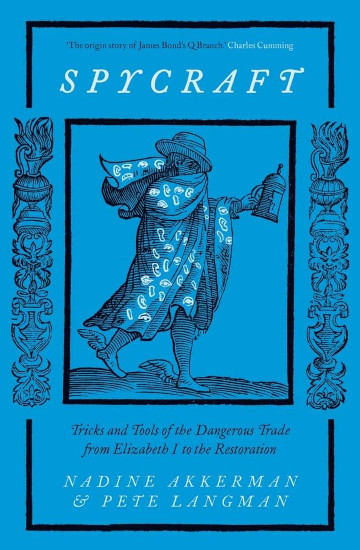
On 25 June Spycraft: Tricks and Tools of the Dangerous Trade from Elizabeth I to the Restoration by Nadine Akkerman and Pete Langman is published. It explores the methods spies used in the Early Modern period, including disguises, invisible inks, and poisons, and shows how the innovations of petty criminals, secretaries, and other hitherto invisible actors shaped the fate of some of history’s most iconic figures.
Jack Roberts is back from the Sudan in Griff Hosker‘s Desert War, the latest Soldier of the Queen novel. With a crippling wound, Jack’s no longer an active soldier. When he is sent to Iran to help find oil for British battleships he has to leave home once more. This time he leaves a son who is about to embark on a military career too. The Roberts family is soon going to war again.
In MJ Porter‘s The Last Alliance (England: The First Viking Age book 9), Coelwulf of Mercia goes south to meet Alfred of Wessex. Ceolwulf faces a choice: come to the aid of their old enemy, Wessex, and its inept king, or risk the return of Viking raiders to Mercia when the West Saxons falter once more? The future of Mercia remains at stake, but her warriors will defend her with their last breaths.
July

Nine books are out on 4 July. In A Woman of Opinion by Sean Lusk, celebrated writer Lady Mary Wortley Montagu has never let society’s limits stifle her. But she wants more. When her husband becomes ambassador to the Ottoman Empire, Mary finds the autonomous life she dreams of. And when she sees Turkish women ‘engrafting’ children against smallpox, she resolves to bring the miracle cure back to England. Find out more from Sean about this remarkable woman.
It’s 1710 in AJ West‘s The Betrayal of Thomas True and Thomas is drawn into the underworld of London’s molly houses. Gabriel Griffin struggles to hide his double life as Lotty, the mollies’ guard, and a carpenter. But being gay can get you hanged, and someone is betraying the mollies’ secrets. Can Gabriel unmask the traitor before it’s too late? Can he save hapless Thomas… and their own impossible love?
Matthew Harffy lights out for 1890s Oregon in Dark Frontier. Lieutenant Gabriel Stokes, longing for peace and meaning, heads to the American West — but finds as much violence there as he met with in the army in Afghanistan and in the Met Police. Can he escape his past and the demons that drive him to find a place for himself on the far edge of the New World? Matthew tells Historia about his experience of writing a Western — and how it’s not that different from his earlier novels. This book is also published on 4 July, as is:
Chain Reactions: The Hopeful History of Uranium by Lucy Jane Santos looks at the fascinating stories found throughout uranium’s history, from glassworks to penny stocks, medicines to weapons, a thing to be feared to a powerful source of energy. By understanding our nuclear past, we can encourage a more nuanced dialogue about whether it is feasible — and desirable — to have a nuclear-powered future. Lucy’s written about researching the unexpected effects atomic testing had on the city of Las Vegas.

Out on the same day is The Paris Muse by Louisa Treger. Paris, 1936. Dora Maar is Picasso’s lover — and a talented photographer, painter and poet. Their turbulent, sometimes sado-masochistic affair and his infidelities cause her torment, while he agonises over the Spanish Civil War. As darkness suffocates their relationship and the Second World War breaks out, Dora has a nervous breakdown and is hospitalised.
Toby Clements is back with A Good Deliverance. Imprisoned in Newgate, Sir Thomas Malory — politician, courtier, outlaw, renowned author of Le Morte D’Arthur — confesses the secrets of his perilously exciting life of sieges, battles and court intrigue to the gaoler’s son and, in doing so, reveals the events that led to his great work of fiction.
Felicity’s War is the first in a new series from Jean Fullerton. In 1941, Fliss Carmichael, a journalist, meets Detective Inspector Timothy Wallace — and a spark ignites. When Fliss intervenes in a crime, Tim’s investigation into black market racketeering puts him in mortal danger. Can their blossoming romance endure the perils ahead? It’s also out on July 4, as is…
Angela Buckley‘s The Bermondsey Murder: Scotland Yard’s First Great Challenge and Dickens’ Inspiration revisits the murder of Patrick O’Connor in August 1849 by Maria Manning and her husband in Bermondsey. Charles Dickens, haunted by the case, immortalised some of the key characters in Bleak House. The Bermondsey Murder remains a legendary crime in the history of Scotland Yard.
Finally on 4 July, in Theodore Brun‘s paperback edition of A Savage Moon, crippled warrior Erlan must rally his strength to reclaim the stolen kingdom of his lover, Lilla. For this, he needs an army — and gold. The Byzantine Emperor’s gold. Barely escaping their heist with their lives, they voyage north for the fight. But, stranded in a foreign land, Erlan and Lilla are drawn into the web of a dark and gruesome foe. Theo has written a history of werewolves for Historia; see why they’re part of his book.

Queen Cleopatra is a new collection of writing about the last Pharaoh of Egypt, introduced and edited by Lindsay Powell. It shows her to be an astute, resilient leader who survived at a time of male domination, as well as the lover of Julius Caesar and Mark Anthony. Publication day is 9 July.
On 10 July, The Girl Who Crossed Mountains by Lelita Baldock sees Abene García flee the Spanish Civil War for France. When the Nazis arrive, threatening innocent Jewish men, women and children, Abene resolves to help. She knows a way to escape. But to get a fugitive pilot to safety, she must cross the mountains once again and return home — to face ever greater dangers.
Annie Garthwaite‘s The King’s Mother, the follow-up to Cecily, will be on the shelves on 11 July. It’s 1461, and Cecily’s son Edward IV has gained England’s throne. But can he keep it? As brother betrays brother, and trusted cousins turn treacherous, other mothers rise up to fight for other sons. Cecily must focus her will to defeat every challenge, for there can be only one King, and only one King’s Mother. Annie writes about the four mothers-in-war for Historia.
Plague rages in Rome in 1656, where Giulia Tofana helps abused women escape their husbands… with a few drops of poison. But the authorities notice that too many men are dying. With a newly-elected Pope bent on ridding the city of heretics and witches, and the Inquisition on her tail, Giulia is in more danger than ever. What will she do now? A Poisoner’s Tale by Cathryn Kemp is also published on 11 July. For Historia, Cathryn asks: was Giulia a murderer — or a saviour?

On the same day, The Night in Venice by AJ Martin is out. Monica is a 14-year-old orphan with a disturbing imagination. In 1911, on a trip to Venice with her governess, Monica realises she may have killed her only guardian. Terrified, she flees into the mysterious streets of Venice, while her thoughts spin back to a dark childhood in London and her fear of what the future holds.
Catherine Hokin‘s The Secret Hotel in Berlin publishes on 12 July. Lili Rodenberg runs Berlin’s glamorous Edel hotel alone while her husband is missing in action in World War Two. But Lili has a secret; she’s Jewish, and she’s hiding Jews in her cellar. Then the Resistance asks for her help. This would risk her daughter’s safety as well as hers. Dare she endanger both their lives for her country’s sake? Catherine’s written about the many lost faces of Berlin.
In The Trouble with Mrs Montgomery Hurst by Katie Lumsden, out on 18 July, Mr Montgomery Hurst of Radcliffe Park is getting married — to an impoverished widow with three children. Society is appalled and intrigued, including Mr Ashpoint, who had hoped his daughter, Amelia, would be the bride. Amelia, though, has no interest in marrying at all. It seems Mr Hurst’s business is everyone’s but his own…
Also on 18 July, The Lost Queen by Carol McGrath takes us to 1191 with Richard the Lionheart. Eleanor of Aquitaine and his bride, Princess Berengaria of Navarre, make a perilous journey over the Alps in midwinter to met him in Sicily. England needs an heir. But first, Richard and his new Queen must return home. For Berengaria, it’s a story of survival, friendship and enduring love. Read Carol’s feature about women and the Crusades.

Martine Bailey‘s Sharp Scratch has its paperback release the same day. See 22 February for details.
The seventh and last book in Griff Hosker‘s Sir John Hawkwood series, Legacy, is published on 26 July, 2024. Old, but still wily as a fox, Hawkwood is drawn into a territorial dispute in the Florentine borderlands. Leading a coalition of city states, he takes the war to the very gates of Milan to cement his legacy as ‘Giovanni Acuto’ – supreme condottiero.
Out on 27 July, The Bomber and the Weathervane by Tony Aston tells how a couple bought an old metal weathervane in the shape of a Lancaster bomber and discovered that it represented an aircraft shot down 1944 over Germany during the Battle for Berlin with the loss of all lives. They wanted to commemorate the crew and reunited the descendants in a war memorial dedication.
Ravenous: A Life of Barbara Villiers by Andrea Zuvich is out on 30 July. Barbara Villiers was beautiful, magnetic and sexually attractive, the muse of artists such as Peter Lely and of writers like John Dryden. She had a tempestuous and passionate relationship with Charles II for most of a decade. Barbara had an insatiable appetite for life, love, riches, amusement, and power: in short, she was ravenous. Andrea writes more about Barbara for Historia.
On the same day, If I Can Save One Child by Amanda Lees, set in 1942, sees Secret Service agent Elisabeth go on one last mission. She knows the Gestapo are on her trail. But in France a little boy, last survivor of a Jewish orphanage, needs her help to escape. The mission may be suicide. But she could never live with herself if she didn’t go to his aid.
August
The month starts with Costanza by Rachel Blackmore on the 1st. When Costanza Piccolomini’s secret lover, the sculptor Gianlorenzo Bernini, unveils his sculpture of her in 1636, he also exposes her. The scandal will rock Roman society. And, even though their affair must end, Bernini would rather destroy Costanza than let her go. But now she has found her voice… We’ll have a feature by Rachel on the history behind her novel.

On 8 August, Douglas Skelton‘s A Grave for a Thief is published in paperback. See 8 February for details. Douglas is writing us a piece about the background to his books. Douglas’s Historia feature about how he started writing historical fiction has some excellent advice for new and experienced writers — and a lot of fascinating information about early 18th century crime.
The paperback edition of 10 Scotland Street by Leslie Hills, out on 9 August, tells the story of an Edinburgh house and its cast of booksellers, silk merchants, sailors, preachers, politicians, of cholera and coincidence and of its widespread connections over two centuries across the globe. Read Leslie’s Historia feature about her research.
13 August sees Corin Burnside‘s dual timeline The Memory Keeper published. In 1940, Bella Gardner’s brother is involved in a tragic accident and she must make a decision that changes the course of her life. In 2014, archaeologist Jennifer Dawson finds the body of a pilot in a crashed wartime plane. Solving the mystery means confronting her own demons, for the answer may lie close to home.
In Paris in 1940, Detective Eddie Giral is no longer just catching criminals; he’s working for them. When a German trader dies, the authorities decide innocent civilians will pay the price — unless Eddie can find the killer in time. As hunger grows, tensions rise, and a fierce rebellion brews, Eddie must do whatever it takes to live with the enemy… and with himself. Banquet of Beggars by Chris Lloyd is out on 15 August. We’ll have a feature by Chris in Historia as well as a giveaway on 9 August.
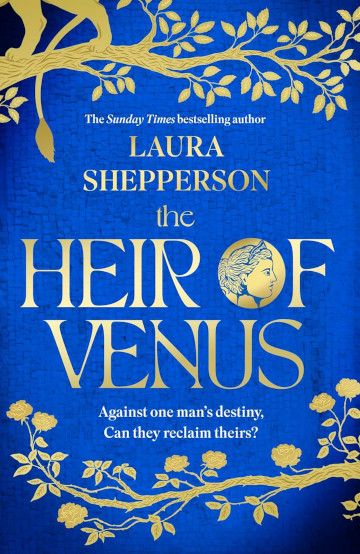
Also on the 15th, in The Heir of Venus by Laura Shepperson, Aeneas, the son of Venus, is destined for greatness. The women behind him, Creusa, Dido, and Lavinia, find his path impacts with their own, unprophecied lives. But if their destiny remains unwritten, can they determine the future for themselves? Laura’s writing us a feature about her book.
Growing up a misfit in Nazi Germany, and as a Luftwaffe pilot, Oskar Bachmann agonises over the cause of his father’s violent abuse in Leaving Fatherland by Matt Graydon, out on 20 August. Books have always been his consolation, and he sees giving his first university lecture as the defining moment of his life. And it is — finally revealing the figure who has been controlling his life from a distance.
Clare Flynn‘s The Artist’s War is the third in her Hearts of Glass series, published on the same day. Hampshire, 1916, and Alice struggles to run the glass workshop while Edmund’s away at the Front, although renewed closeness with her brother, Victor, is a comfort. But her stepdaughter, Lottie, becomes more withdrawn, and Alice fears she’ll never see Edmund again. Then a telegram arrives…
Scandalous Women by Gill Paul is out on 29 August. It’s 1966, and Jacqueline Susann and Jackie Collins both have racy novels published. But being women who write about sex has a price. Nancy White works at a Manhattan publishing house, where she’s responsible for the two authors meeting. Will the Jackies clash as they race to top the charts? Will Nancy become an editor, despite the men holding her back?

On the same day, Clairmont by Lesley McDowell hits the shelves. It’s 1816, and despite the worst storms that Europe has seen in decades, Percy and Mary Shelley, with Mary’s 18-year-old step-sister, Claire Clairmont, visit Byron in Italy. Claire’s pregnant with Byron’s child — a child Byron doesn’t want. This trip should have given her everything she ever dreamed of. But within days, her life will be in ruins.
Also on the 29th, The Wartime Book Club by Kate Thompson is released in paperback. See 15 February for more information. Kate writes about her experiences of visiting Jersey to research her book in Uncovering Jersey’s wartime resistance.
September
In Love’s Knife by Tracey Warr, out on 2 September, it’s 1093, and Beatriz de Farrera is a trobairitz (a female troubadour) at the court of Toulouse. She sings of love but intends to evade marriage. In a world of scheming lords and plotting abbots, set against the Reconquista, a brutal murder occurs. Beatriz must uncover the secrets of the Toulouse court to expose the murderer and avert a great injustice.
Jane Thynne‘s Midnight in Vienna is published on 5 September. As war looms, Stella Fry returns from Vienna and takes a job with mystery writer, Hubert Newman — who dies the next day. Harry Fox, formerly of Special Branch, has his own reasons for being interested in Newman. He tells Stella he believes that the writer’s death was no accident. And, as the last person to see Newman, she could be in danger herself. Jane is writing us a piece about her book.

On the same day, Elisabeth Gifford‘s The Mischief Makers has Daphne Du Maurier caught in a love affair that threatens her marriage, and worried about a family friend, JM Barrie. In her own writing, a character called Rebecca seems uncomfortably like her husband’s ex. Daphne must confront the dark truth beneath Peter Pan as well as her own secrets — or her next great work may be lost to history.
Still on the 5th, in The Royal Rebel by Elizabeth Chadwick it’s 1338 and Jeanette of Kent, Edward III’s cousin, is in Antwerp, where she and household knight Thomas Holland fall in love. They marry in secret, but Thomas must go war, and Jeanette is forced into a second marriage. Then Thomas returns, and, as hostile family members battle to keep the couple apart, the defiant lovers vow to be reunited.
10 September sees The Shortest History of Japan by Lesley Downer published. Here are the emperors and warlords, the samurai and women warriors, the merchants and geisha who shaped this society. The story flows from the hunter-gatherers who fashioned the world’s first pots and the novel-writing ladies of the 11th-century court to the devastation of Hiroshima and today’s economic and cultural powerhouse. Lesley’s Historia feature looks at the different roles played by women over 1,000 years of Japan’s history.
Four books are out on 12 September, including Circus of Mirrors by Julie Owen Moylan. In Berlin in 1926, sisters Leni and Annette only have each other. When Leni finds work at the notorious Babylon Circus cabaret she hides in the shadows — until she meets the pianist, Paul. 20 years later, the cabaret in ruins, the sisters have a new mouth to feed and Paul has vanished. But one of them has a secret. And it must come to light.

Operation Tulip by Deborah Swift is the third in her WWII Secret Agent series. Holland, 1944, and British agent Nancy Callaghan impersonates a wealthy Nazi to infiltrate the Dutch SS. In England, coding expert Tom Lockwood devises Operation Tulip, a plan to bring his beloved Nancy home. But Nancy catches the eye of a senior member of the Party. Is Nancy in too deep, or can Tom reach her before she’s caught?
Also on 12 September, Ethan Bale‘s Swords of the White Rose series continues with The Knight’s Redemption. In Spring 1486, veteran mercenary Sir John Hawker and his band of misfits return to Venice to attempt to free his love, Chiara. If he survives, can he make amends and start a new life? Or will his loyalty to Sir Giles Ellingham lead him back to England to join the rebellion against Henry Tudor?
And A Court of Betrayal by Anne O’Brien is published in paperback on the same day. See 29 February for full details.
On 19 September The Mare by Angharad Hampshire is published, based on the true story of brutal concentration camp guard Hermine Braunsteiner, the first person to be extradited from America from Nazi war crimes. Hermine concealed her past from her husband. How could an ordinary woman descend so quickly into evil? And why did her husband stand by her despite discovering what she had done? Carolyn Kirby reviews Angharad’s book for Historia.
The Last Bookshop in Prague by Helen Parusel is one of three books out on 25 September. Bookshop owner Jana helps the Prague wartime resistance using her window displays as covert signals and hiding secret codes in books. But the arrival of a Jewish boy with nowhere else to turn and a fascist police captain change everything. When secrets are currency and stories can be fatal, who can she trust?
Ten Years After is the final Amy Rowlings mystery from TA Belshaw. In August, 1939, the discovery of a hidden skeleton causes amateur sleuth Amy Rowlings and Inspector Bodkin to team up again. Suspicion falls on the local amateur dramatic club and a fallen theatre star. Will the few clues remaining and the fading memories of witnesses be enough to help Amy and Bodkin to bring a brutal killer to justice?

And in Traitor’s Game by Rosemary Hayes it’s 1808 and Captain Will Fraser, just back from the Peninsular War, finds his brother, Jack, missing. Will’s recruited to seek Jack, a government agent who may have unmasked a French spymaster. His search leads him to France — but nothing’s straightforward in this murky world of espionage.
Out on 26 September, Keith Lowe‘s Naples 1944 is the story of the first major European city to be liberated by the Allies. Naples suffered destruction by the Germans and Allied bombing; then Vesuvius erupted. The first major history of wartime Naples to appear in English, this book contains many stories that have never been published in any language and places Naples at the heart of WWII Italian history. Keith is writing us a piece about the events on 1944.
On the same day, Night Climbing by Sarah Day sees Sylvia’s world crumble when her son, Cyril, vanishes during a school trek in the German mountains. Was his teacher responsible? Meanwhile, in a German mountain village, Hilde sees Nazi flags appearing. The English schoolboys’ rescue shakes her community, sparking political strife. Neighbour turns on neighbour, endangering Hilde and Sylvia’s quest for Cyril.
Finally on the 26th, Blood Roses by Douglas Jackson, the first in his Warsaw Quartet, is out in paperback. See 7 March for more information. To find out the historical inspiration for his book, see Douglas’s feature, How I discovered my war hero uncle’s secret.
The strength of relationships with nature that Rama, Sita and Lakshmana make to restore balance in life is the subject of The Living Legend: Ramayana Tales from Far and Near by Vayu Naidu, out on 30 September. Rama is 26 when he and his brother Lakshmana enter the dark Dandaka forest. What is the task at hand? Is the earth calling out for help? He must gather his thoughts and take action. Vayu’s feature linked to this tale will be in Historia soon.
October
On 1 October, Menewood by Nicola Griffith is out in paperback. It’s the sequel to Hild. Hild is now lady of Elmet, building her stronghold in the valley of Menewood. But Edwin, facing war ahead, recalls her to court. There Hild realises she must find a way to fight to protect both the kingdom and her own people, risking all on a single throw for a better future. Nicola’s written about the background to her novel and the Battle of Hatfield in 632.
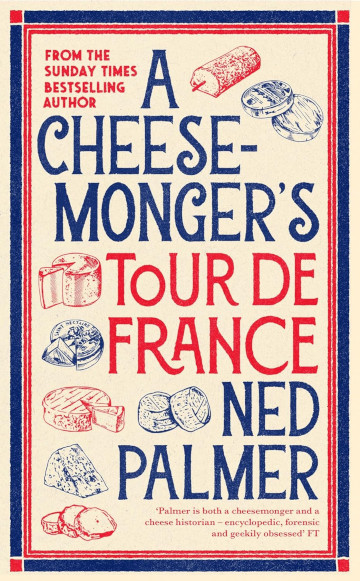
Four books are out on 3 October. Every French cheese carries an essence of the place where it’s made — its history, identity, and landscape, as Ned Palmer shows in A Cheesemonger’s Tour de France. Travelling round the country’s regions, he explains the mysteries of terroir and why each of those different fromages taste as they do. A French cheeseboard, he finds, offers genuine insights into the nature of France.
The Little Book of Hertfordshire by Ruth Herman tells many of the county’s surprising stories. It was home to saints such as St Alban, St Thomas More and the only English Pope, Nicholas Breakspear. But Hertford elections were once the most corrupt in the country. Elizabeth I became queen there; Henry VIII sought refuge while waiting for his first divorce; engineers secretly developed WWII-winning bombers.
Also on the 3rd, On the Narrow Road to the Deep North by Lesley Chan Downer is reissued. Lesley follows in the footsteps of the poet Matsuo Basho to explore the country’s remote northern provinces. Basho’s journey is Japan’s most famous travel book and Lesley creates her own funny, loving and honest portrayal of contemporary Japan, a drab post-industrial landscape, but also a land still full of the old enchantments. Read Lesley’s feature on outstanding Japanese women.
And The Skeleton Army, the second in Alis Hawkins‘s Oxford Mysteries, is published in paperback. See 4 April for more.
On 8 October, The Fugitive’s Sword by Eleanor Swift-Hook is the first in her Lord’s Learning series. In Autumn 1624, young Philip Lord has vanished from James I’s court under the shadow of treason. New at court, Kate de Bouqulement is trapped in a deadly power struggle. Meanwhile, Filippo Schiavono and Jorrit are taken by privateers. The tides of fate bring them and Kate together. Can they survive?

It’s Norse action day on 10 October. Blood of the Bear is Angus Donald‘s fifth Fire Born novel. In 781 Saxony groans under Karolus’s Christian yoke and Duke Widukind hopes to persuade Bjarki, the berserker turned family man, and the shieldmaiden Tor to join his revolt. But Bjarki’s wife was once Abbio the Crow’s betrothed. In revenge, Abbio casts a spell of madness on Bjarki. Can he resist it? Can the rebels succeed? Angus writes about the real conflicts behind his novel.
The same day sees Tim Hodkinson‘s Sword of the War God published in paperback. See 11 April for full details. Tim’s written about the legendary stories from the 5th century which still resonate today.
Two books are out in paperback on 24 October. The Paris Peacemakers by Flora Johnston is set in Paris 1919; see 18 April for further details.
And The Murderer Inside the Mirror by Sarah Rayne is the second in her Theatre of Thieves mysteries. Check 4 June for more information.
On 31 October, Arm of Eve: Investigating the Thames Torso Murders by Sarah Bax Horton brings to light what’s known about a notorious, unidentified serial killer. The author uses the known facts about the murderer to find a known criminal with a similar modus operandi. Waterman and lighterman James Crick is the best match. There are uncomfortable overlaps with the ‘Jack the Ripper’ series of murders. Read Sarah’s feature about the history behind her investigations.
November
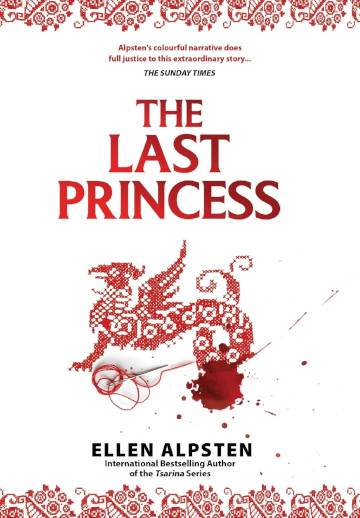
In The Last Princess by Ellen Alpsten on 7 November, young, beautiful Gytha Godwinson’s father Harold seizes the country’s crown in early 1066. However, treachery tears her house, her family and everything she holds dear apart. Her family and the realm seem cursed, but even as she suffers loss, betrayal and humiliation, Gytha is determined to regain what is rightfully hers. Ellen’s written a feature about whether women can write about the events of 1066.
Also on the 7th, Eye of the Raven is Tim Hodkinson‘s latest novel in the Whale Road Chronicles. For the first time, Einar and the Wolf Coats are on opposing sides: the Wolf Coats in Norse Ireland, and Einar in Saxon England. Einar leads a warband for King Aethelstan, but struggles to find acceptance as a Norseman. With war brewing, can Einar and his comrades reunite — or will their split be a permanent one?
And Death Of A Princess, the third in RN Morris‘s Empire of Shadows series, is released as an ebook, with the paperback edition promised soon. Investigating magistrate Pavel Pavlovich Virginsky arrives in Lipetsk seeking treatment after a nervous breakdown. A couple at the sanatorium urge him to investigate a princess’s suspicious death. He’s reluctant — but then he overhears some important information… Roger’s feature on the history behind this book will be in Historia in December.

A Plague of Serpents is out in paperback on the same day. KJ Maitland‘s Daniel Pursglove series concludes in 1608 with another dangerous mission from the King. See 25 April for more.
Norse Warrior by Griff Hosker, the first in his new Norseman series, is published on 10 November. When Charlemagne declares war on the pagans of of the North, he is unaware of the storm he is about to unleash. Meanwhile, in a small fjord in the north of Norway, a young Norse warrior is about to embark on a journey that will take him far to the south, beyond the land of the Angles and the Franks.
The second book in Douglas Jackson‘s Warsaw Quartet, Blood Sacrifice, hits the shelves on 14 November. It’s January 1943. In the Warsaw ghetto, the last 50,000 Jews are preparing to fight to the end. The murder of a German officer draws double agent Jan Kalisz into the ghetto, where a figure known as the Golem is spiriting away orphaned children. Can Kalisz track him down before he strikes again? Douglas has written a powerful piece about researching traumatic events for us.
On the same day, A Thief’s Blood (A Company of Rogues book four) by Douglas Skelton is out. A family is found butchered in the London slums and Jonas Flynt is sent to investigate. When another family is murdered, Flynt uncovers a simmering conflict between rival gangs. But is this more than gang warfare? Is there someone else, dangerous and deranged, stalking London with blood on their hands?
A neglected passage of World War II history is examined in The Liberation of Strasbourg 1944 by Paul StJohn Mackintosh, published on 15 November. French forces liberated this trophy city after a Nazi collapse, only to almost lose it again in the Battle of the Bulge. De Gaulle described the liberation of Strasbourg as “one of the most brilliant episodes in our military history.” But who did the fighting?
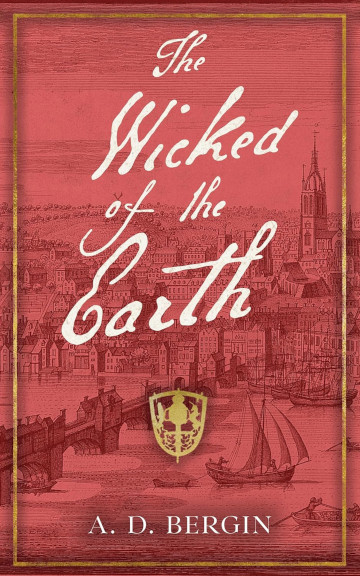
The Wicked Of The Earth by AD Bergin is out on 21 November. October, 1650, and Parliamentarian spy James Archer goes home seeking his sister Meg, missing after Newcastle’s witch trials. Enigmatic Elizabeth Thompson draws him to investigate the killing of women who had worked to free the accused. But when Elizabeth herself becomes hunted, the only chance of escape lies in Archer setting himself as bait. Read Carolyn Kirby’s interview with the author about the history behind his novel, and how he turns known facts into a gripping story.
Melanie Backe-Hansen has teamed up with Cath Harries for Doors of London, also on 21 November. The front door is the focal point of a building. It draws the eye of the visitor and conveys the status and aspirations of the occupants. Past generations have often left traces of their presence. The authors tell the stories behind the doors, including those about Dr Johnson, Oscar Wilde and Wallis Simpson.
Burials and Other Stories, a short story collection by Rob McInroy, is published on 27 November. Ranging from 1832 to the present day, these 20 intertwined stories set mainly in Perthshire are a study of community and kinship, the need to belong and the pain of disconnection, revealing the complexities of lives spent negotiating with the ghosts of the past, the present and the future.
The fifth in Vaseem Khan‘s Malabar House series, City of Destruction, is released on 28 November. In Bombay in 1951, Persis Wadia kills a would-be assassin and sidelined in the hunt for his co-conspirators. She’s given another case — which leads her to New Delhi, where ancient and modern India openly clash.. Meanwhile Archie Blackfinch is fighting for his life as the country tears itself apart in the prelude to war.
December
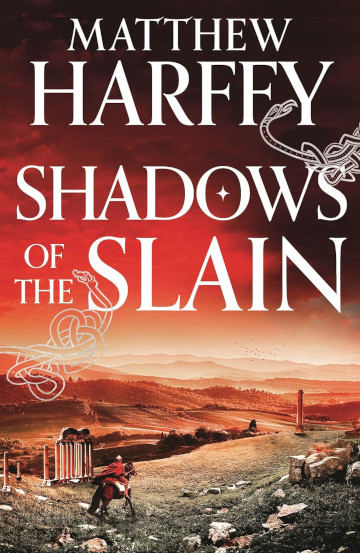
Our last books are out on 5 December. It’s 652 in Shadows of the Slain, the 10th in Matthew Harffy‘s Bernicia Chronicles, and Beobrand is escorting a party of pilgrims to Rome. The roads heading south are filled with danger and he finds himself reluctantly responsible for more pilgrims’ safety. But when Beobrand reaches the snakepit of ruins and relics that is Rome, his difficulties truly begin… and his homeland has never been further away. Read Matthew’s feature about Rome in the 7th century.
Litany of Lies by Sarah Hawkswood is out in paperback on the same day. See 23 May for more details.
Our last book of 2024 is Captain of Horse by Griff Hosker, out in paperback on 18 December and in ebook format on the 20th. It’s the second in his English Mercenary series. Captain James Bretherton now has money and a wife and hopes to leave the world of war. But then Gustavus Adolphus of Sweden, in his fight for the Protestant cause, needs a captain of horse. He needs James.
If you’ve got this far, thank you! I hope you’ve found something you’d like to read this year.
If you see a book you’d like to buy, or persuade your library to get, please consider ordering it before the publication day. That will mean you read it as soon as it’s out — and it also gives the author a sales boost on their first day, which, along with reviewing their book, is an excellent way to show your appreciation.
This page will be regularly updated as more information comes in, so do come back and have another look.
And you can keep up with new books as they’re published by checking Historia’s Latest releases column.


