

She was a pioneering explorer, a travel writer writer and novelist, an earl’s daughter who reinvented herself, a woman with a drive to “be something”. So why haven’t more of us heard of Lady Dorothy Mills? Her biographer, Jane Dismore, aims to change that.
When Lady Dorothy ‘Dolly’ Mills was a young girl, a female relative told her she would never be beautiful so she had better be interesting.
Born in 1889 into the political and literary Walpole family – her five-times great uncle, Sir Robert Walpole, was Britain’s first Prime Minister, and his famed son Horace wrote the first gothic novel – there was a fair chance she would be.
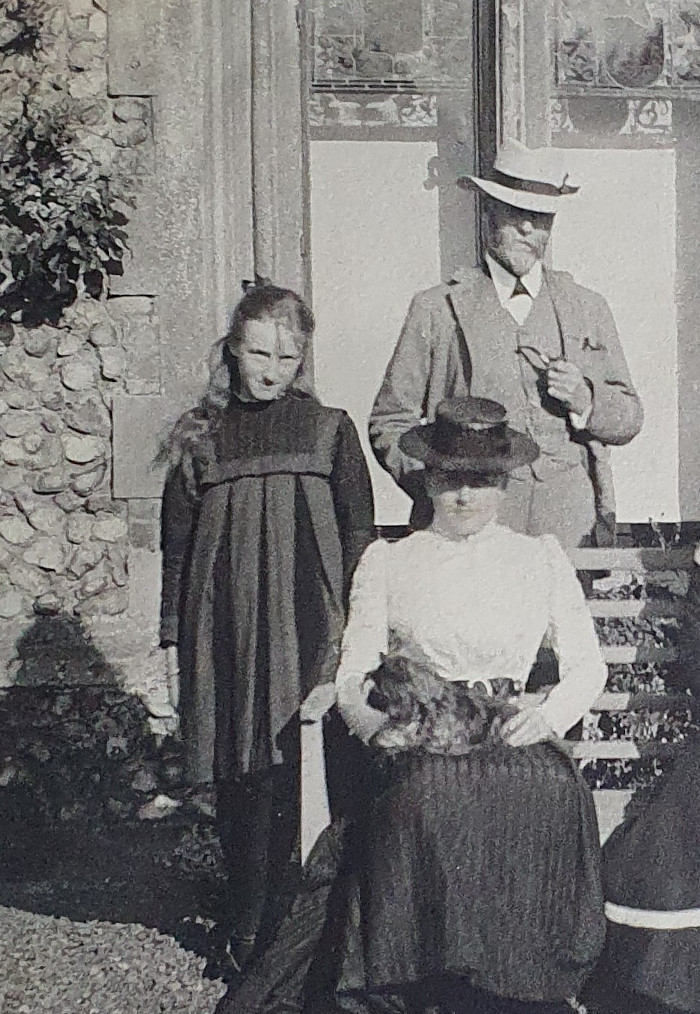
She was raised in two of Norfolk’s finest houses, Wolterton and Mannington, her father an earl, her American mother the daughter of a wealthy railroad magnate, and seemed to have it all. However, such privilege was tempered by factors such as her father’s clear wish for a male heir when she “stubbornly remained an only child,” and the sudden, early death of her mother.
When in 1916 Dolly married a clever but poor army officer, Captain Arthur Mills, who had been shot in the Great War and invalided home, the earl disinherited her. A year later, in pursuance of the desired son, he married a woman three years younger than his daughter, prompting Dolly to write sadly, “I was an Outlier from my tribe.”
When Arthur returned to the war, Dolly had her “first taste of the economic problem”. She realised she was ill-equipped for anything useful and also knew she needed to “be something”. An extraordinary metamorphosis followed.
Defying the expectations of her class and sex, she took control of her own destiny to become the best-known female explorer of the 1920s and 30s, travelling during the volatile period following the Great War to countries where European women had rarely, if ever ventured. Enduring physical and mental challenges and achieving several firsts, she turned her experiences into acclaimed travel books and escapist fiction.
Given Dolly’s fame at the time, it is extraordinary that No Country for a Woman is the first book about her life. Indeed, since her death in 1959, she has been almost completely overlooked except for occasional and often inaccurate references in travel compendiums. During her lifetime her books were relied as a source of information and, more recently, for academic study but now are out of print, her passionate prose and self-deprecating humour forgotten.

It is as though something has conspired to keep her out of history. Ultimately, though, the memory of a person can be kept alight only by the living, and if no-one does that, there is only darkness.
To ease her financial worries, Dolly began by taking on journalistic work of every kind, as well as having her first novel, Card Houses, published. Her earnings also helped to finance the expeditions she had long dreamed of. For months each year she would exchange the decadence of Jazz Age London for desert, jungle and bush, where she found great solace. She had fallen in love with the Sahara when holidaying in Algeria.
Her first expedition was to Tunisia in 1922, to stay with the reclusive cave dwellers; she would excel in observing different tribes. Those who accompanied her on her expeditions were people she hired locally as guides, porters, interpreters. She never travelled with close companions, not even Arthur, who undertook his own journeys to find writing material for the adventure stories he would become known for.
They would reunite in their London flat, holiday together, then write and socialise. She also wrote feminist features for the emerging ‘modern woman’, as well as nine novels, including science fiction and the new genre of ‘desert romances’.

In 1923 Dolly became the first English woman to travel to Timbuktu, enduring deadly heat, sickness, man-eating crocodiles and a male pursuer with teeth filed to sharp points. That achievement and the first of her six travel books, The Road to Timbuktu, cemented her reputation as an explorer and a travel writer.
West Africa kept drawing her back. She explored French and Portuguese Guinea and wrote of the history of colonialism and of slavery. She was the first woman to cross Liberia to one of its remotest points, encountering cannibals en route and realised she was the first white person some had seen.
Various places she explored remain troubled today, such as the Middle East, where changes to borders and regimes after the Great War had created hostilities and uncertainty. Her itinerary in 1925 was potentially dangerous: Asia Minor, Syria, the Holy Land, Trans Jordan, Iraq. In Tel Aviv she witnessed history in the making when Lord Balfour opened the first Hebrew University, a momentous event of which her observations were prescient.
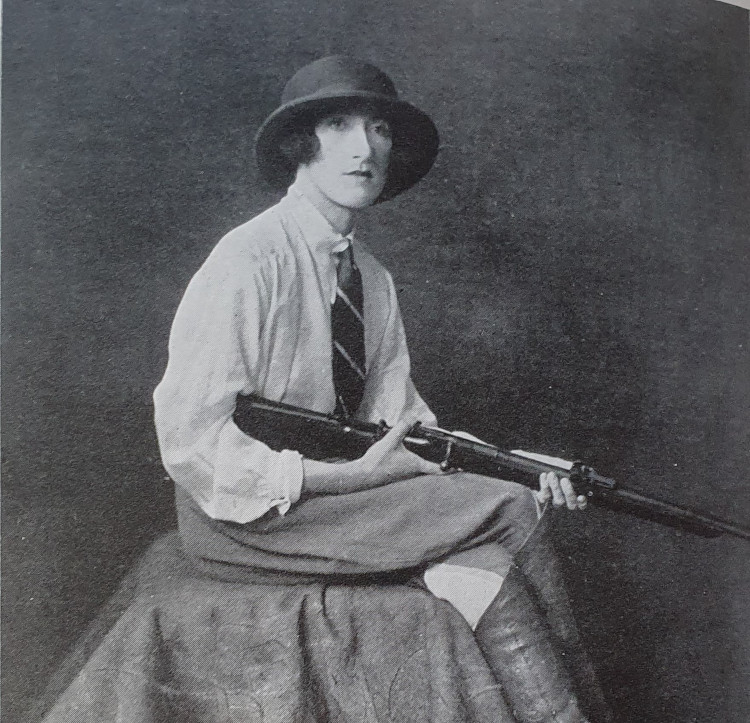
Dolly was elected a Fellow of the Royal Geographical Society (RGS), a rare honour for a woman at that time. In 1931 she spent four months exploring Venezuela by river and across 800 miles of challenging terrain, and was believed to be one of only two women who had explored the Orinoco. She shared platforms with prominent men and appeared in travel books with male adventurers.
But personal challenges also marked her life. She suffered a serious accident, not deep in the wilds of Africa but in a London taxi. Her father stunned the aristocratic world and dismayed Dolly when, during his lifetime, he signed over her beloved childhood homes to a distant male relative who was still a minor.
Her firm belief that couples should maintain separate as well as joint friends and interests, which she publicly advocated, led to the breakup of her marriage.
All these issues, together with the recurring effects of her accident, would see her withdraw from the spotlight, although her work was still quoted. Any feeling of self-pity, though, was brief. Always keen to foster a sense of adventure in others, she left a legacy in her will for a young woman member of the RGS “for some explorative enterprise by land or air”.
Dolly never lost her love of donning a glamorous frock and downing a cocktail. It would have been fun knowing her. Above all, her curiosity, courage and sense of humanity showed the world extraordinary places and peoples, focusing always on what draws us together rather than what divides us.
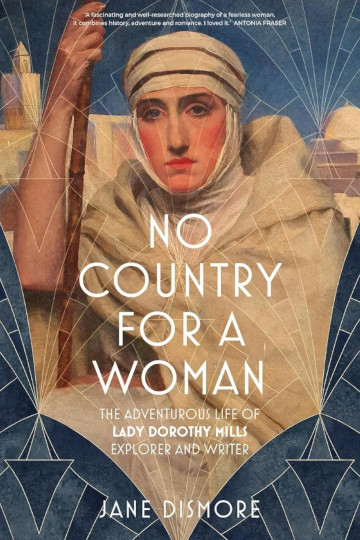
No Country For a Woman: The Adventurous Life of Lady Dorothy Mills, Explorer and Writer by Jane Dismore was published on 20 March, 2025.
See more about this book.
Jane is a biographer and history writer and a Fellow of the Royal Historical Society. This is her fifth book. She also writes for a wide range of publications and has appeared on television, radio and in podcasts.
janedismore.com
Twitter/X
Facebook
Read Damned Souls: an aristocratic Victorian scandal, Jane’s feature about the affair that shattered a group of 19th-century upper-class bohemians.
You may also enjoy these related features:
Six godmothers of archaeology by Alexandra Walsh
Finding the decadent women of the 1890s by Jad Adams
How Mary Wortley Montagu and other great 18th-century women were forgotten by Sean Lusk
The women left behind by Scott’s Antarctic expedition by Anne Fletcher
How period guidebooks and maps help me write murder mysteries. by Fiona Veitch Smith
Images:
- Lady Dorothy Mills, CNews, Agence Rol, December 1923: Bibliothèque nationale de France (public domain)
- Dolly with her parents, the Earl and Countess of Orford (courtesy Laurel, Lady Walpole): supplied by the author
- Lady Dorothy Mills by Alfred J Bennett, 1921: Wikimedia (public domain)
- Dolly in the Sahara (Dolly’s photo, from the book More Heroes of Modern Adventure): supplied by the author
- Dolly, c1923, from her book The Road to Timbuktu: supplied by the author


